
If you've recently set up a limited company, your first year end can be confusing. There are several deadlines, from two different bodies. Here's how they work.
Your accounting reference date
Your company's year end is set automatically by Companies House, usually as the last day of the month in which the company was formed. You can change it if another date suits you better.
Annual accounts to Companies House
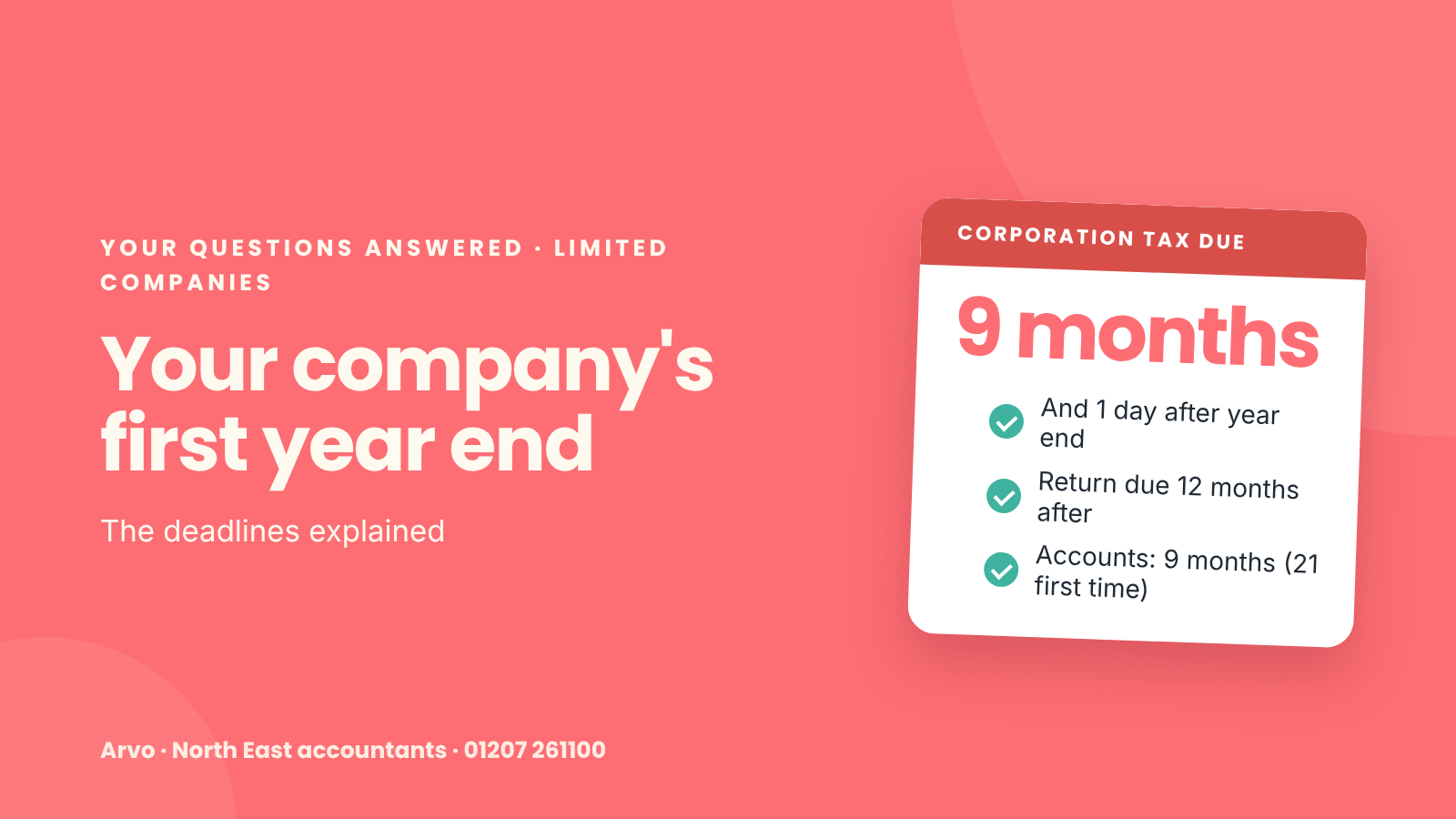
First accounts: due 21 months after the company was formed
After that: due 9 months after your year end
Late filing brings automatic penalties, which rise the later you file.
Corporation Tax payment
For most small companies, Corporation Tax is due 9 months and 1 day after your year end. Interest is charged if you pay late.
Corporation Tax return
Your company tax return (the CT600) is due 12 months after your year end. Yes, the payment is due before the return.
Confirmation statement
At least once a year, you must confirm your company's details with Companies House, like directors, shareholders and registered office. There's a fee, and it's due within 14 days of the anniversary of the review period.
Your first period
A company's first accounting period can be longer than 12 months, but a Corporation Tax period can't. So if your first period is, say, 15 months, you'll have two Corporation Tax returns to file.
Tips
Put all your deadlines in your diary as soon as the company is formed
Keep your bookkeeping up to date through the year
Set aside money for Corporation Tax every month
How Arvo can help
We're a local accountancy practice in Stanley, County Durham, and we work with new and growing limited companies across the North East. We'll keep track of every deadline and file everything on time.
Get in touch to arrange a free, no-obligation chat, or call us on 01207 261100.