
You may have seen headlines about a new "side hustle tax". There isn't one. But something has changed, and it's worth understanding.
What has changed
From 1 January 2024, online platforms such as eBay, Vinted, Etsy and Airbnb have had to collect information about their sellers. The first reports, covering 2024, go to HMRC by 31 January 2025.
The tax rules themselves haven't changed. HMRC just has more information to check against.
Who gets reported?
Platforms don't need to report sellers who make fewer than 30 sales and earn less than about £1,700 (€2,000) in a calendar year. Above that, your details are shared.
Being reported doesn't mean you owe tax. It just means HMRC can see the activity.
Selling your own things
If you're clearing out your wardrobe or loft and selling items for less than you paid, that's not trading and there's usually no tax to pay.
When it is a business
You may be trading if you:
Buy things to sell at a profit
Make items to sell
Sell regularly, as an ongoing activity
Offer services through an app
The trading allowance
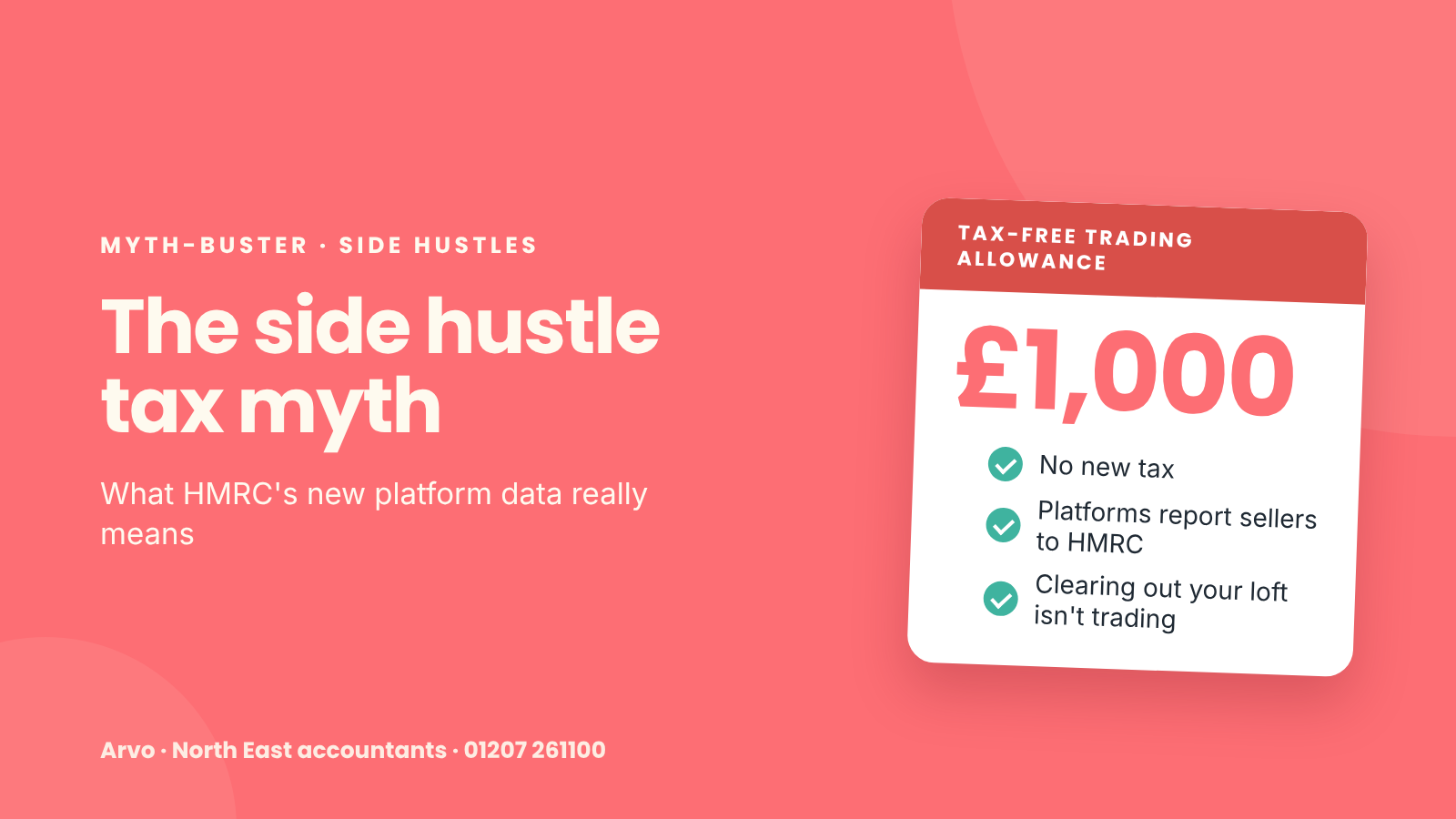
If your trading income is £1,000 or less a year, the trading allowance means it's tax-free and you don't need to tell HMRC. Above that, you'll usually need to register for Self Assessment.
Renting out property
The same goes for short-term lets and rooms. The £1,000 property allowance covers small amounts, and Rent a Room relief can cover up to £7,500 for a furnished room in your own home.
What to do
If you've been earning more than £1,000 from a side hustle and haven't told HMRC, it's better to come forward yourself than wait to be contacted.
Related reads
Tips and tronc: the new rules for pubs, cafés and restaurants
6 scary tax mistakes sole traders make (and how to avoid them)
How Arvo can help
We can tell you whether you need to register, and get you up to date with HMRC if you've fallen behind.
Get in touch to arrange a free, no-obligation chat, or call us on 01207 261100.