
Lots of businesses start as something on the side. If you're keeping your job while you get going, here's what to know about tax.
Under £1,000?
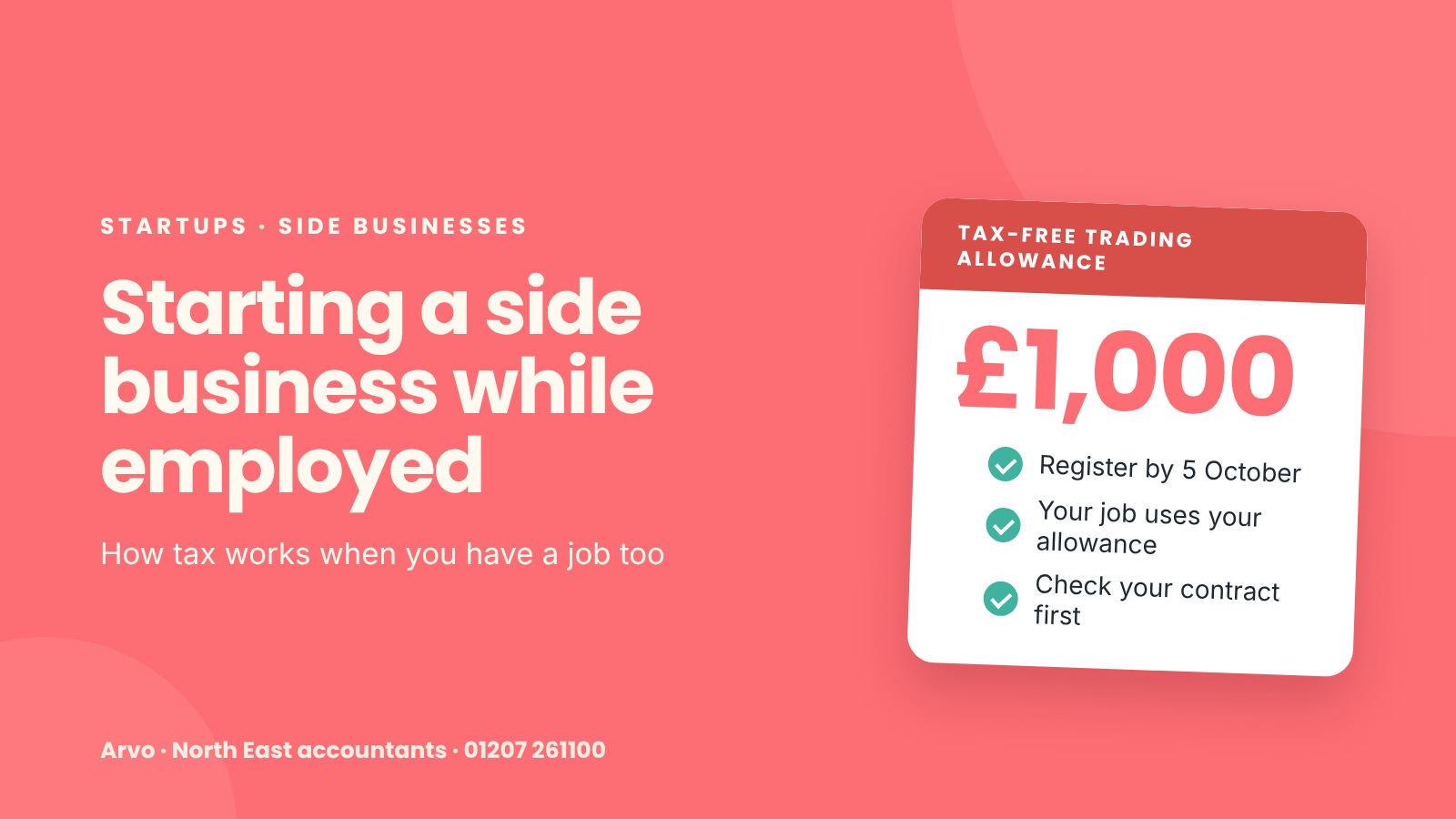
If your side business brings in £1,000 or less a year, before expenses, the trading allowance means it's tax-free and you don't need to tell HMRC.
Over £1,000
You'll need to register for Self Assessment by 5 October after the end of the tax year you started. So if you start in June 2025, register by 5 October 2026.
How it's taxed
Your job usually uses up your £12,570 Personal Allowance. That means your side business profit is taxed from the first pound:
20% if your total income is under £50,270
40% above that
You'll also pay Class 4 National Insurance at 6% on profits over £12,570. Your employee NI on your job is separate.
Claim your expenses
You can deduct allowable costs, like materials, equipment, software, a share of your phone and mileage. Or you can use the £1,000 trading allowance instead of actual expenses if that's better.
Paying the tax
If you owe less than £3,000 and file online by 30 December, HMRC can usually collect it through your tax code instead. Otherwise you'll pay by 31 January, possibly with payments on account too.
Check your contract
Before you start, check your employment contract for:
Rules on second jobs or competing with your employer
Intellectual property clauses about work you create
Conflicts of interest
Other things to think about
Keep business money in a separate account
Your extra income may affect Child Benefit, student loan repayments or tax credits
Check you have the right insurance
Related reads
How Arvo can help
We can register you with HMRC, work out what to set aside and file your tax return, so you can focus on growing the business.
Get in touch to arrange a free, no-obligation chat, or call us on 01207 261100.