
The North East has a long history of engineering and manufacturing, and plenty of firms here are doing R&D without calling it that. If you've had to design, test and rework something because there was no off-the-shelf answer, you might have a claim.
What might count
Designing a part or product that has to cope with heat, pressure, loads or conditions standard parts can't
Developing a new manufacturing process, or changing an existing one in a way that needed real trial and error
Working with new materials, or using existing materials in a way that hadn't been done before
Cutting waste or energy use where the solution wasn't obvious and needed testing
Building prototypes and test rigs to prove whether an idea will work
What usually doesn't
Making products to a known design
Installing new machinery and using it as the manufacturer intended
Routine quality control and testing
Production runs once the technical problem has been solved
What costs you can claim
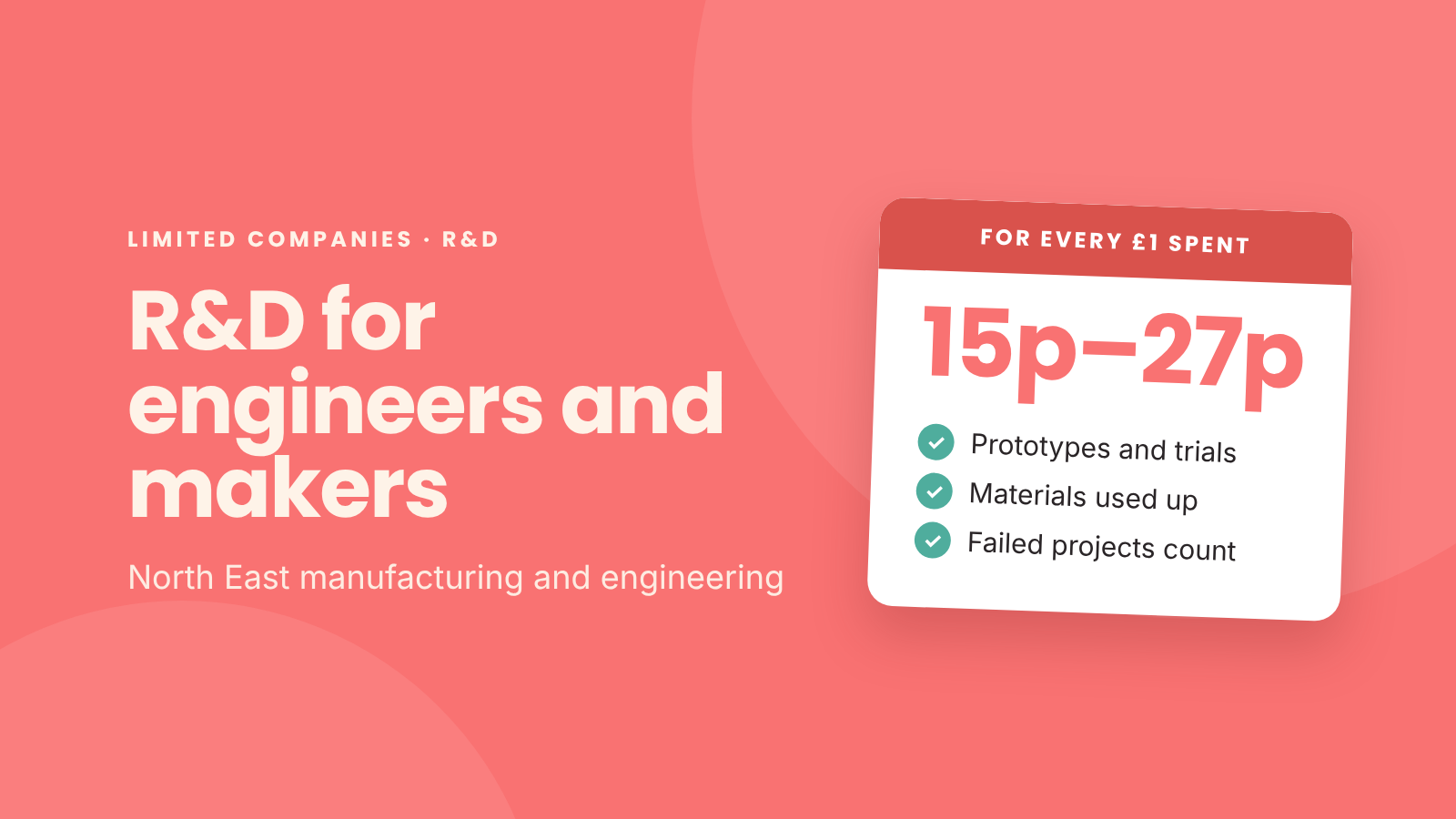
You can usually claim staff costs for the people working directly on the R&D, materials used up or changed in prototypes and trials, and UK-based subcontractors, usually at 65% of the cost. Prototypes that fail are often some of the strongest evidence.
What it could be worth
Most profitable companies keep around 15p to 16p for every £1 of qualifying R&D spend under the merged scheme. Loss-making companies that spend heavily on R&D can get around 27p in cash. Try our R&D calculator for a rough figure.
You might also find these useful
How Arvo can help
We're a local accountancy practice in Stanley, County Durham. Tell us what you've been working on and we'll give you an honest view. If it sounds like R&D, we'll introduce you to a specialist we trust to prepare your claim.
Find out more about our R&D tax relief service.
Get in touch to arrange a free, no-obligation chat, or call us on 01207 261100.