
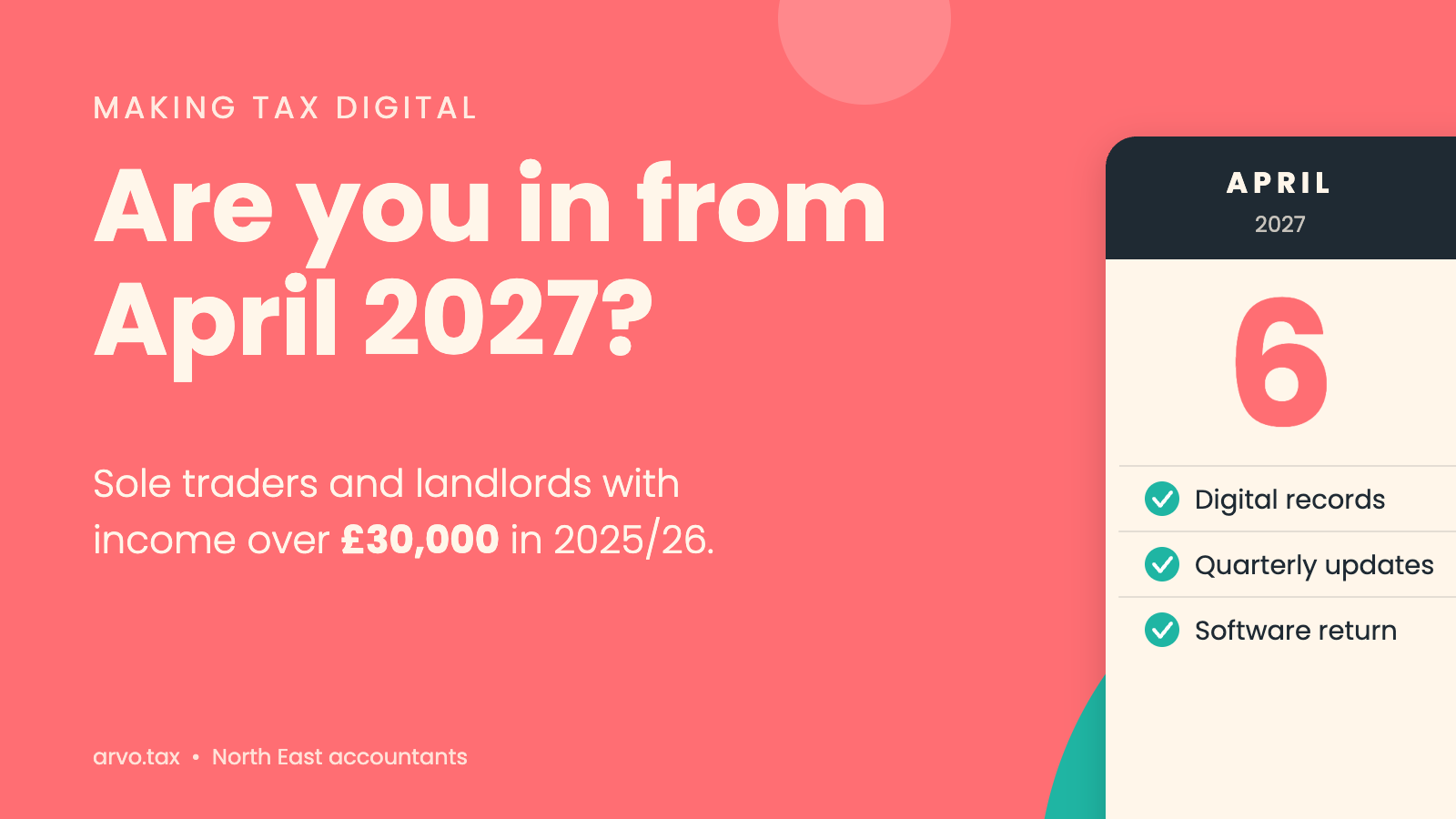
If you're a sole trader or a landlord, the way you report to HMRC is about to change. Making Tax Digital (MTD) for Income Tax started in April 2026 for people with income over £50,000. From 6 April 2027 it widens to anyone over £30,000, which brings in thousands more people across County Durham and the North East.
Here's how to tell if you're affected, what actually changes, and what to do before April.
Who has to join in April 2027
You'll need to use MTD from 6 April 2027 if your qualifying income for the 2025/26 tax year was over £30,000.
Qualifying income is your self-employed turnover plus your gross rental income, added together, before expenses
It's turnover, not profit. A sole trader who takes £32,000 and makes £15,000 profit is still in
For a jointly owned property, you count your own share of the rent
Wages from a job, pensions, dividends and savings interest don't count
Limited companies and partnerships aren't included yet
A quick example: a joiner turning over £22,000 who also lets out a flat for £10,000 a year has qualifying income of £32,000. They're in from April 2027.
The timeline
Over £50,000 in 2024/25 – in from 6 April 2026 (already live)
Over £30,000 in 2025/26 – in from 6 April 2027
Over £20,000 in 2026/27 – in from 6 April 2028
HMRC will use your 2025/26 tax return, the one due by 31 January 2027, to work out whether you're in. So getting that return right matters more than usual.
What actually changes
Digital records – you keep your income and expenses in MTD-compatible software, not a notebook or a shoebox of receipts
Quarterly updates – every three months, your software sends HMRC a summary of your income and expenses. The deadlines are 7 August, 7 November, 7 February and 7 May
A final return through your software – by 31 January after the tax year ends, in place of the usual Self Assessment return
What doesn't change is when you pay. Quarterly updates are summaries, not tax bills. Your payment dates stay 31 January and 31 July.
Your first year
If you join in April 2027, your first quarterly update covers 6 April to 5 July 2027 and is due by 7 August 2027. You'll still file your 2026/27 tax return the usual way, by 31 January 2028.
Miss a quarterly update and you get a penalty point. Reach four points and HMRC charges a £200 penalty. The grace year that early joiners had doesn't apply to the April 2027 group, so it pays to be ready from day one.
What to do now
Add up your 2025/26 turnover and rental income. Over £30,000 means you're in
Choose your software now, not in March
Open a separate bank account for the business if you don't already have one
Start keeping digital records from January, so you get three months of practice before it counts
Decide whether you'd like an accountant to send your quarterly updates for you
Some people can apply for an exemption, for example if age, disability or where you live means you can't reasonably use digital tools. You'll still need to file a normal tax return.
Related reads
Business energy bills: what you can claim, and the VAT you might be overpaying
How much does an accountant cost? A plain-English guide for North East businesses
How Arvo can help
Arvo is based in Stanley, County Durham, and we help sole traders and landlords right across the North East get ready for Making Tax Digital. We'll check whether you're in, set up your software and send your quarterly updates, so you can get on with running your business.
Still working on your 2025/26 return? Start with our Self Assessment checklist.
Get in touch to arrange a free, no-obligation chat about Making Tax Digital.