
Taking on your first member of staff is a sign your business is growing. It also brings new responsibilities. Here's what to sort out before their first payday.
1. Register as an employer
You need to register with HMRC as an employer before the first payday. HMRC will give you a PAYE reference. It can take a couple of weeks, so don't leave it to the last minute.
2. Check their right to work
Before they start, check that they have the right to work in the UK, and keep a copy of the evidence. The fines for getting this wrong are high.
3. Pay at least the minimum wage
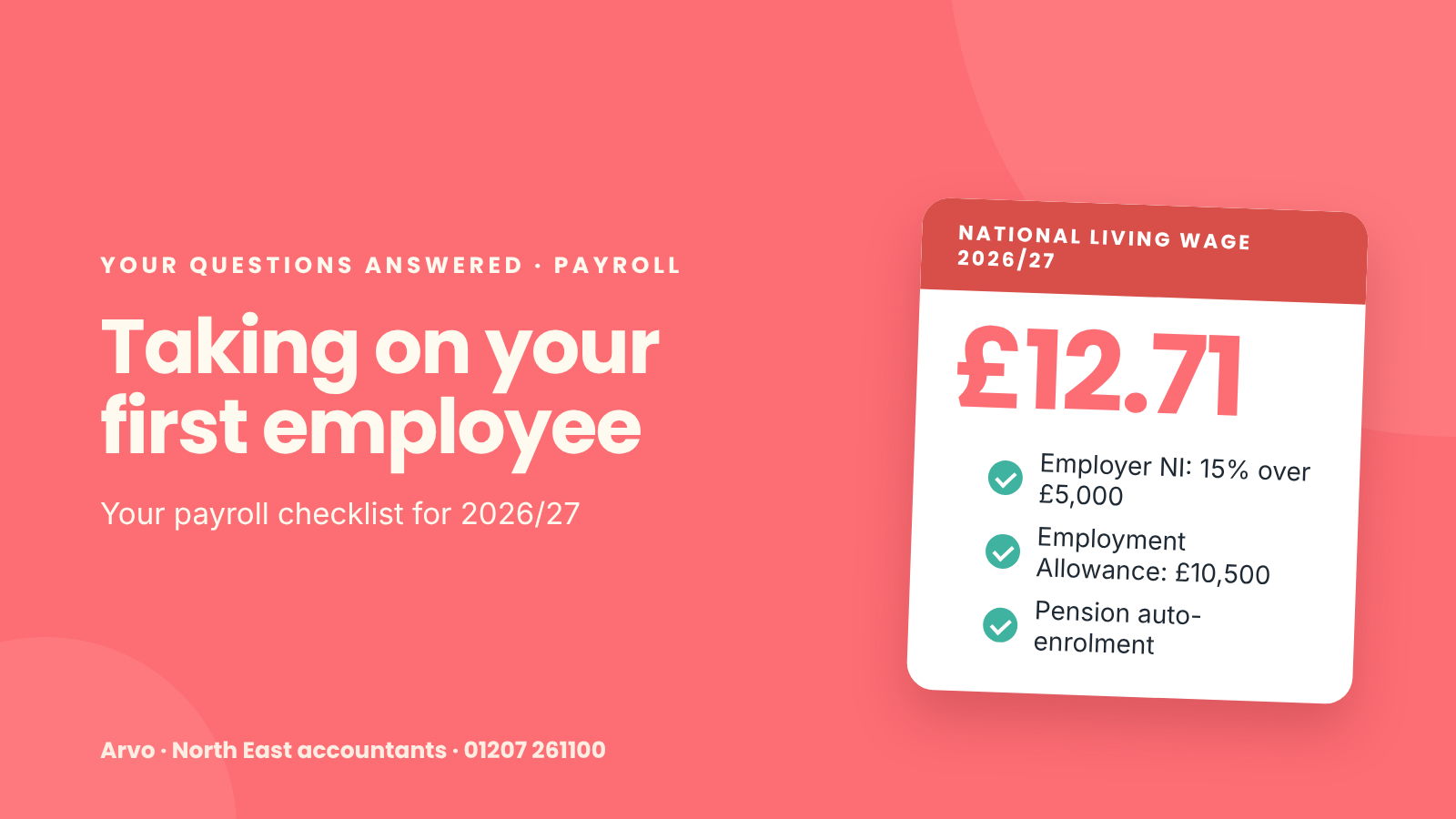
From April 2026, the National Living Wage for workers aged 21 and over is £12.71 an hour. Lower rates apply to younger workers and apprentices. Remember that unpaid time, like compulsory training, still counts.
4. Run payroll through HMRC's system
Each time you pay someone, you send a report to HMRC on or before payday. You'll need payroll software or an accountant to do this. You also give your employee a payslip and deduct their tax and National Insurance.
5. Budget for employer National Insurance
Employers pay National Insurance at 15% on earnings above £5,000 a year per employee. On a £25,000 salary, that's around £3,000 a year on top of wages.
The good news is the Employment Allowance. Most small employers can knock up to £10,500 a year off their employer National Insurance bill. For many small businesses, that covers the first few employees completely. It isn't available if the only person on the payroll is a company director.
6. Set up a workplace pension
If your employee is aged 22 or over and earns more than £10,000 a year, you must enrol them in a workplace pension. You'll pay at least 3% of their qualifying earnings, and they pay at least 5%. Even if they don't qualify, they can ask to join.
7. Get insurance and the paperwork in place
Employers' liability insurance is a legal requirement for most employers
Give a written statement of employment terms from day one
Keep records of hours, pay and holiday
What does an employee really cost?
As a rough guide, budget for wages plus 10% to 20% on top for employer National Insurance (after the Employment Allowance is used), pension contributions, holiday cover and insurance.
How Arvo can help
We're a local accountancy practice in Stanley, County Durham. We can register you as an employer, run your payroll each month and handle pension auto-enrolment, so you can get on with running your business.
Get in touch to arrange a free, no-obligation chat, or call us on 01207 261100.