
The Chancellor's first Budget on 30 October 2024 raised around £40 billion in tax. Here's what matters most for our clients across County Durham and the North East.
Employers
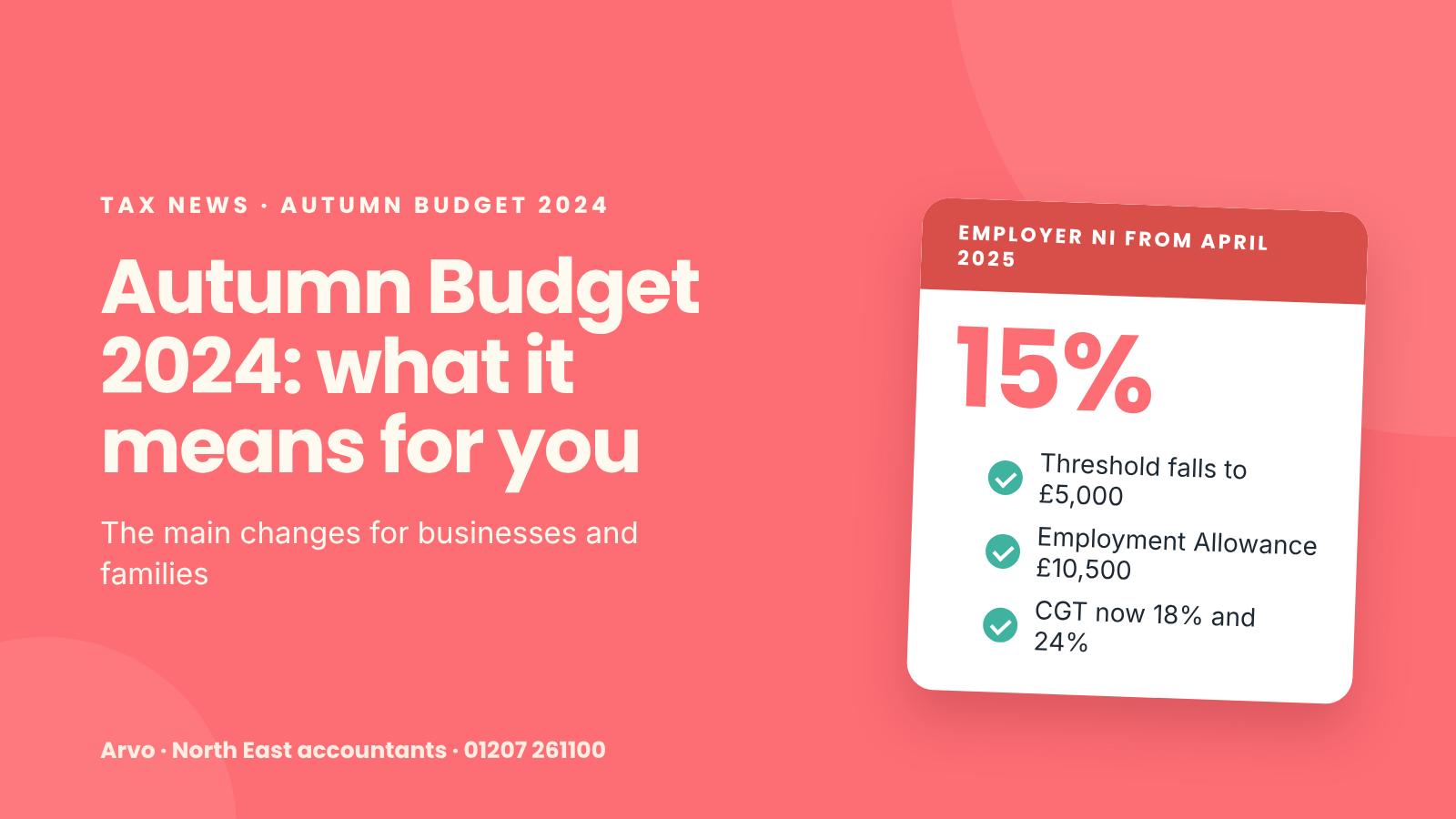
Employer National Insurance rises from 13.8% to 15% from 6 April 2025
The threshold where employers start paying falls from £9,100 to £5,000 a year
The Employment Allowance rises from £5,000 to £10,500, and the £100,000 eligibility limit is removed
The National Living Wage rises to £12.21 an hour from April 2025
For many small employers, the bigger Employment Allowance will cover most or all of the increase. Larger teams will feel it more.
Capital Gains Tax
From 30 October 2024, the main rates rose from 10% and 20% to 18% and 24%, the same as residential property. Business Asset Disposal Relief rises from 10% to 14% in April 2025, then 18% in April 2026.
Property
The Stamp Duty surcharge on second homes and buy-to-let purchases rose from 3% to 5% from 31 October 2024. The furnished holiday lettings regime will end in April 2025, as previously announced.
Inheritance tax
Allowances stay frozen until 2030
Unused pensions will count towards an estate from April 2027
Agricultural and business property relief will be capped at 100% on the first £1 million from April 2026, with 50% relief above that
What didn't change
Income Tax and employee National Insurance rates stayed the same, and the freeze on tax thresholds won't be extended beyond 2028. Fuel duty stays frozen for another year and Corporation Tax stays at 25%.
Related reads
How Arvo can help
We'll be writing about the biggest changes in more detail over the coming weeks. If you want to know how the Budget affects you or your business, we're happy to run through it.
Get in touch to arrange a free, no-obligation chat, or call us on 01207 261100.