
If you sell a UK residential property that isn't your main home, like a buy-to-let or second home, there's a tight deadline you need to know about.
The 60-day rule
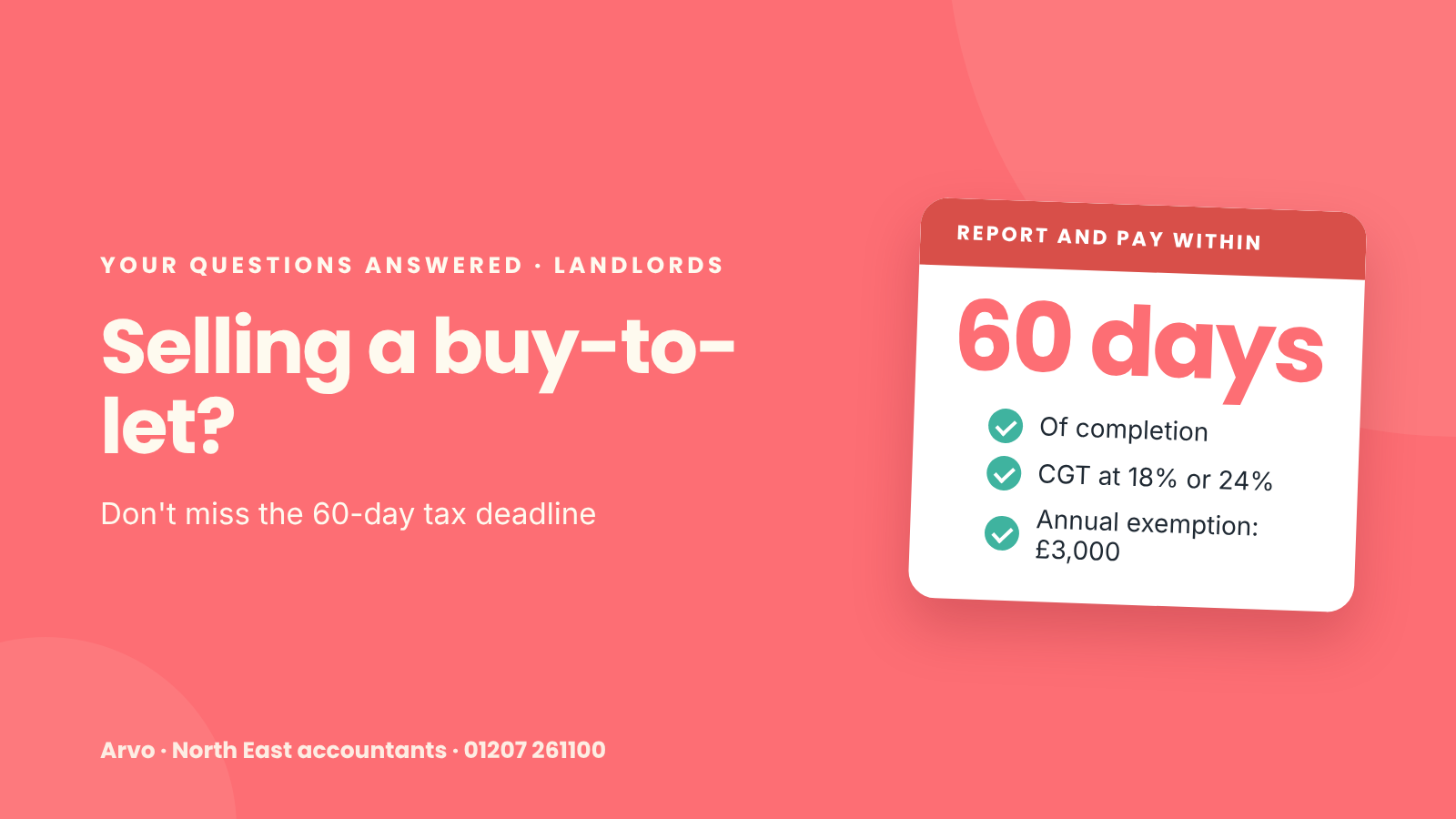
You must report the sale to HMRC and pay any Capital Gains Tax within 60 days of completion. This is separate from your normal Self Assessment tax return, and it uses HMRC's online property service.
Many landlords miss it, because they assume it's dealt with in January. Late reporting brings penalties, and interest is charged on late tax.
How much tax?
Capital Gains Tax on residential property is charged at:
18% on gains within your basic rate band
24% above that
Everyone gets an annual tax-free allowance of £3,000 of gains.
Working out the gain
Your gain is broadly the sale price, minus:
what you paid for the property
buying costs, like Stamp Duty and legal fees
selling costs, like estate agent and legal fees
the cost of improvements, like an extension (but not repairs or maintenance)
Did you live there?
If the property was once your home, you may be able to claim Private Residence Relief for the time you lived there, plus the final nine months of ownership. This can reduce the gain a lot.
Jointly owned?
If you own the property with someone else, you each report your own share and get your own £3,000 allowance.
Plan ahead
Talk to us before you sell, not after
Keep records of what you paid and any improvements
Set aside money for the tax from the sale
How Arvo can help
We're a local accountancy practice in Stanley, County Durham, and we work with landlords across the North East. We'll work out the gain, claim every relief, and file and pay within the 60 days.
Get in touch to arrange a free, no-obligation chat, or call us on 01207 261100.