
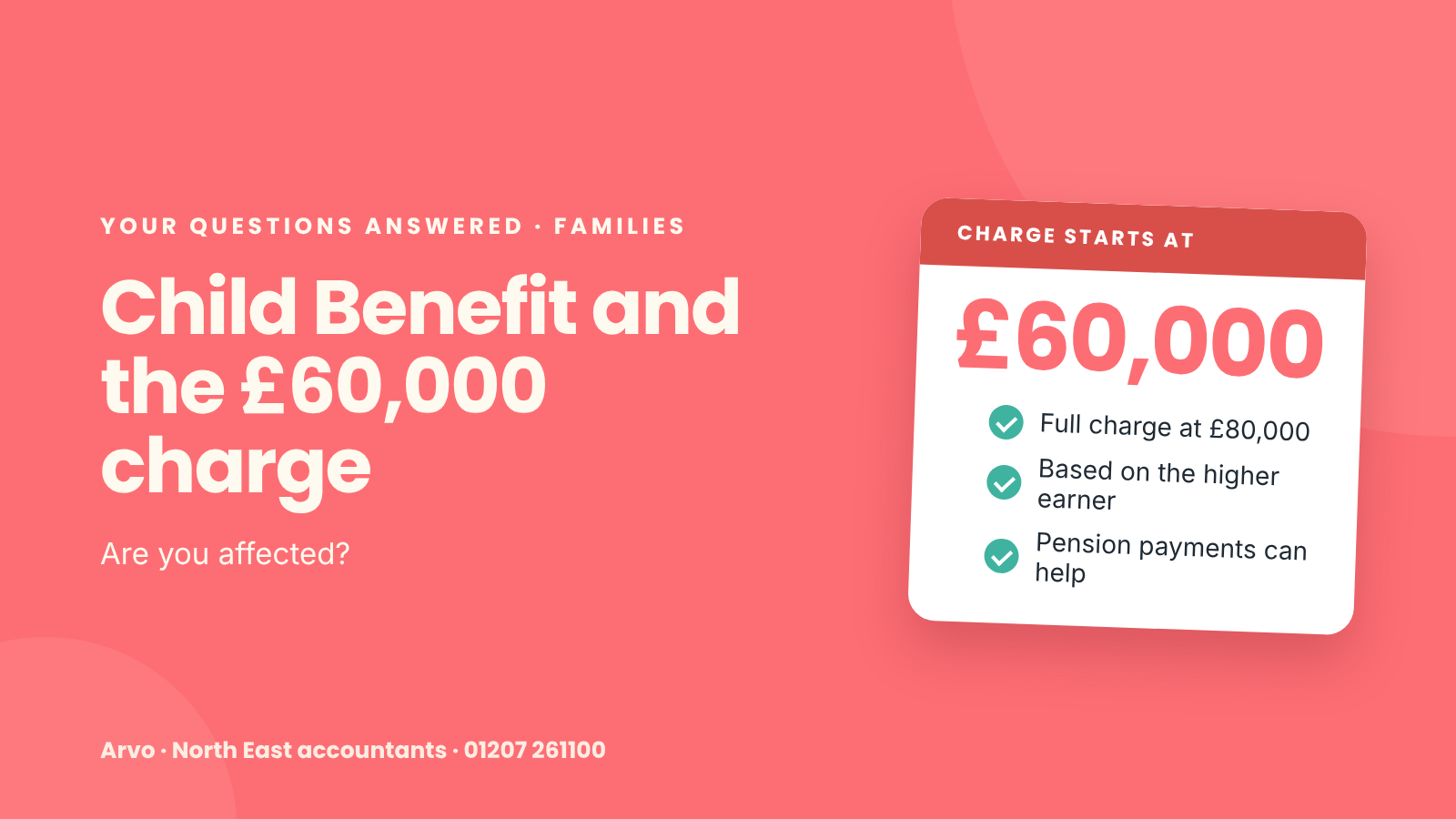
Child Benefit is a valuable payment for families. But if you or your partner earn over £60,000, you may have to pay some or all of it back through the High Income Child Benefit Charge.
How the charge works
The charge is based on the adjusted net income of the higher earner in the household, not your combined income.
Below £60,000: no charge
Between £60,000 and £80,000: you pay back 1% of your Child Benefit for every £200 of income over £60,000
Above £80,000: you pay back all of it
So if the higher earner has income of £70,000, they'll pay back half.
Should you still claim?
Usually, yes. Even if you pay it all back, claiming Child Benefit can protect the State Pension record of a parent who isn't working, through National Insurance credits. You can claim and then choose to stop the payments.
How to pay it
If you're employed and don't otherwise file a tax return, you can now use HMRC's online service to pay the charge through your tax code instead of registering for Self Assessment.
If you're self-employed or already file a return, it goes on your tax return.
Ways to reduce it
Your adjusted net income can be reduced by:
pension contributions, including salary sacrifice
Gift Aid donations to charity
For someone just over £60,000, a pension contribution can reduce the charge and boost their pension at the same time.
Check your income
It's easy to cross £60,000 without realising, for example with a pay rise, bonus, rental income or savings interest. If you think you're close, it's worth checking.
How Arvo can help
We're a local accountancy practice in Stanley, County Durham. We'll work out whether the charge applies, how much you owe and how to reduce it.
Get in touch to arrange a free, no-obligation chat, or call us on 01207 261100.