
The Chancellor delivered the Autumn Budget on Wednesday 28 October 2026. Here's what it means for sole traders, landlords, employers and families in the North East.
Landlords and savers: higher tax rates
From April 2027, income tax on property income and savings interest goes up again, to:
24% for basic-rate taxpayers
44% for higher-rate taxpayers
49% for additional-rate taxpayers
That's two percentage points higher than previously planned. If you have rental income or large savings outside an ISA, it's worth reviewing your position before April.
Sole traders and side hustles
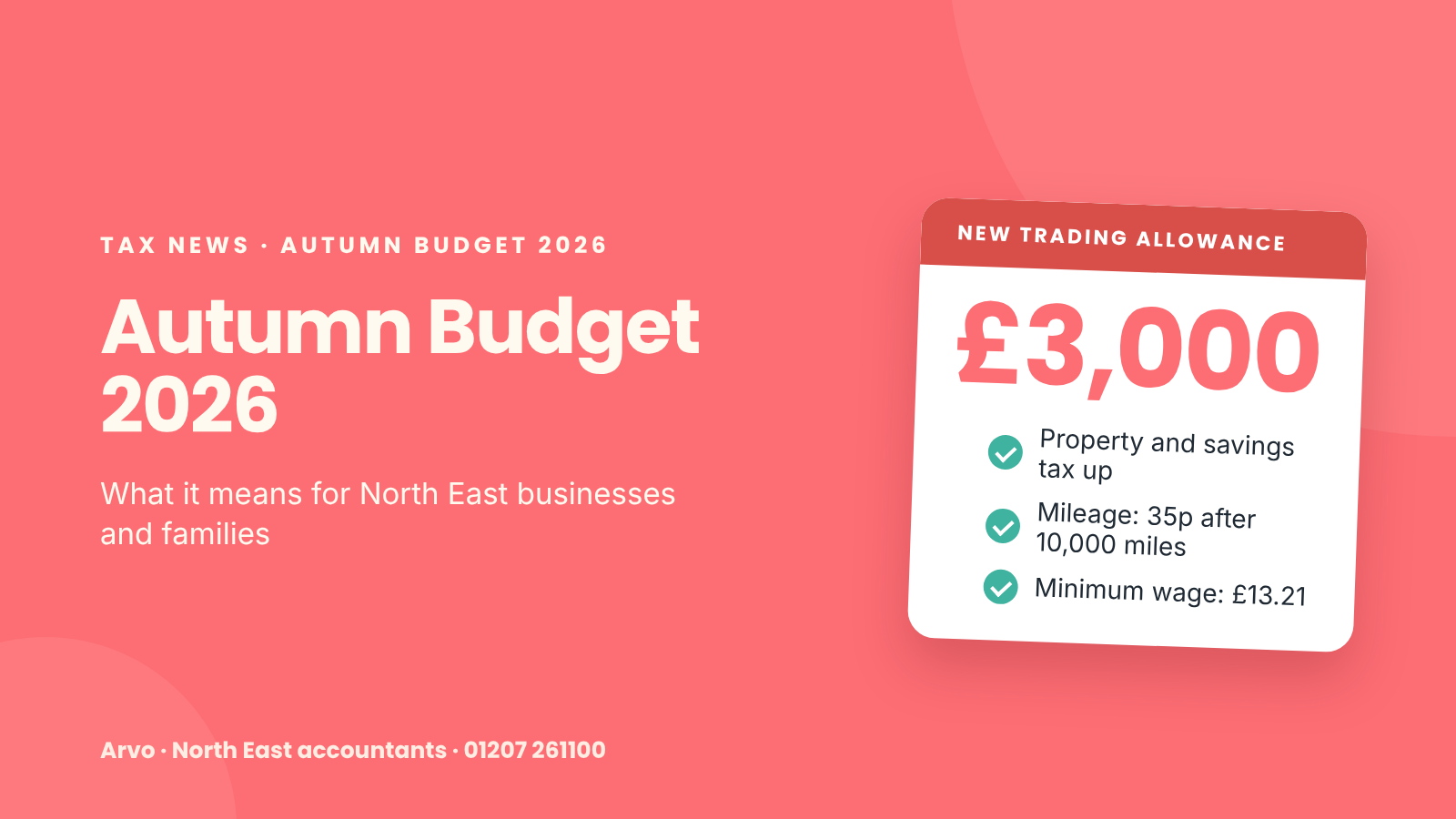
The trading allowance triples from £1,000 to £3,000 from 6 April 2027. If your trading income is under £3,000 a year, you won't need to tell HMRC or pay tax on it.
The 55p mileage rate for the first 10,000 business miles is here to stay. The rate after 10,000 miles goes up from 25p to 35p from April 2027, which helps high-mileage drivers.
Employers
The National Living Wage goes up to £13.21 an hour from 1 April 2027, a 3.9% rise.
Payrolling of benefits like company cars, vans and fuel becomes compulsory from April 2027.
Businesses buying equipment
The first-year allowance for main-rate plant and machinery goes up from 40% to 50% from 1 January 2027.
Full expensing for companies continues.
The writing-down allowance falls from 14% to 12% from April 2027.
Selling a business
The lifetime limit for Business Asset Disposal Relief halves to £500,000 from 6 April 2027. A new Founders' Relief offers a 10% rate on larger gains for some business founders. If you're planning to sell, timing matters.
Families and pensioners
A new allowance means pensioners whose income is no more than the full new State Pension won't pay small amounts of income tax.
The 0% VAT on household electricity is extended into summer 2027.
The 5p fuel duty cut continues until July 2027.
What didn't change
The VAT registration threshold stays at £90,000.
Making Tax Digital still starts for sole traders and landlords with income over £30,000 from April 2027.
How Arvo can help
We're a local accountancy practice in Stanley, County Durham. If you're not sure how the Budget affects you, we'll talk it through and help you plan before the changes start in April.
Get in touch to arrange a free, no-obligation chat, or call us on 01207 261100.